EVERY MONITOR WATCHES THE NUMBER.
ALUNENA WATCHES THE TRAJECTORY.
ALUNENA reads the kinetic signature of your patients' vital signs — deviation, velocity, momentum — and predicts the trajectory toward a critical event before the binary threshold alarm fires.
A software-only overlay that integrates with your existing bedside monitors and HL7 feeds. No new hardware. No replacement of your monitoring infrastructure.
The Problem
WHY ALARMS FIRE TOO LATE
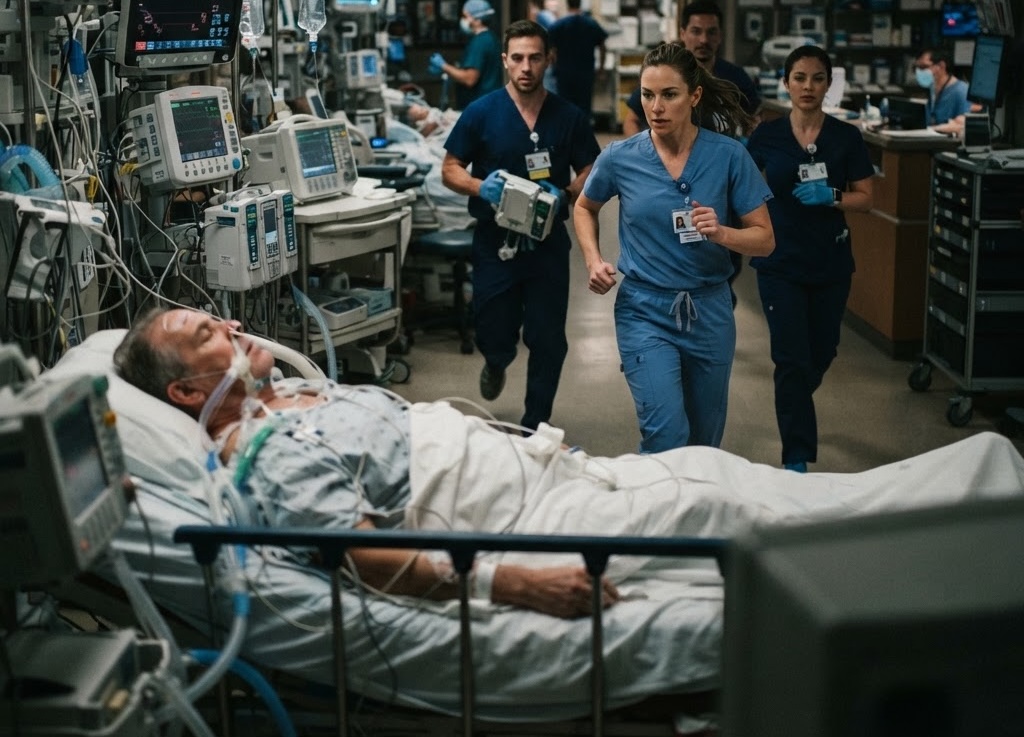
Reactive Monitoring
Bedside monitors wait until a vital crosses a fixed threshold — HR > 120, SpO₂ < 90% — then sound the alarm. By then, the patient is already in distress. The alarm tells you what already happened.
ALUNENA
ALUNENA watches the trajectory — how fast the vital is changing, how much momentum it carries — and flags the deteriorating patient minutes before the threshold is crossed.
How It Works
THE SAME PHYSICS THAT PREDICTS MOTION
PREDICTS DETERIORATION.
A vital sign is a signal in motion. ALUNENA treats it like a physical object — reading its mass, velocity, and momentum to project where it's heading, not just where it is.
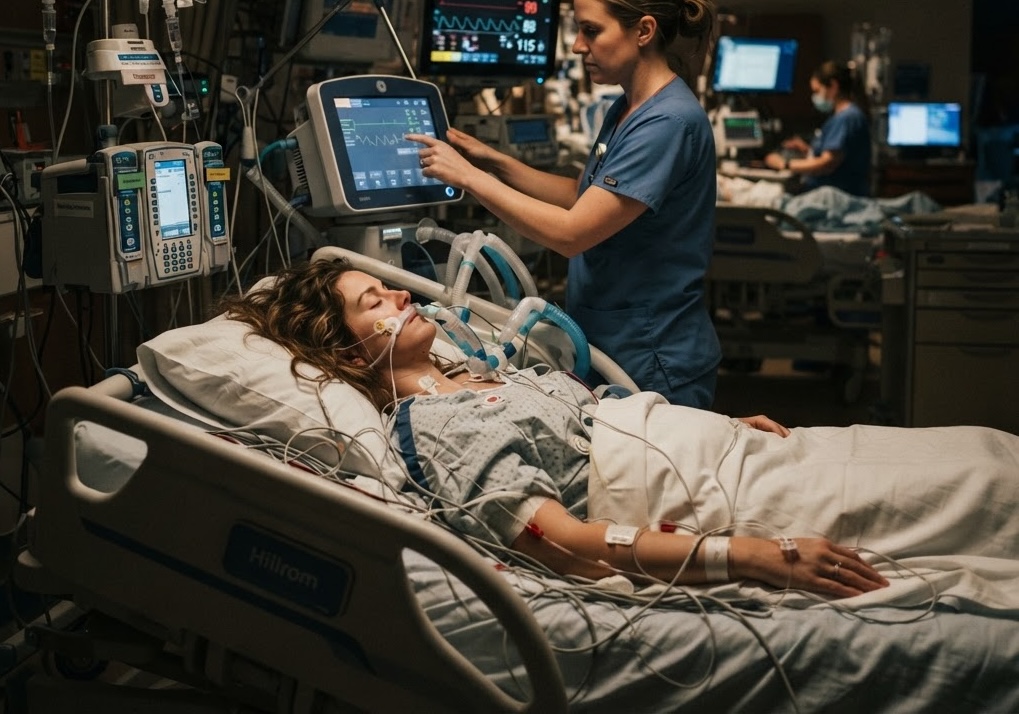
It Reads the Vital
ALUNENA ingests the same vital signs your bedside monitors already produce — heart rate, blood pressure, SpO₂, respiratory rate, temperature — through your existing HL7 feed.
It Computes the Kinematics
The engine calculates the deviation from the patient's personalized baseline, the structural mass of the reading, and the rate of change (velocity). No new data — just new math on existing data.
It Projects the Trajectory
When the velocity and momentum cross a kinetic threshold, ALUNENA flags the patient as trending critical — before the binary alarm would have fired. The trajectory is the early warning.
It Directs the Response
One of three directives: STABLE, OBSERVE, or RAPID RESPONSE. The clinical team gets the prediction and the recommended action, not just a raw number.
The Three Directives
STABLE
Vital is within normal physiological parameters. No action needed.
OBSERVE
Elevated variability detected. Watch this patient more closely.
RAPID RESPONSE
Critical trajectory detected. Patient is trending toward a clinical event.
The Engine
ALUNENA READS THREE THINGS
The same kinetic principles that describe how objects move through space — applied to your patients' vital signs in real time.
Deviation Rate
How far the vital has moved from the patient's personalized baseline. A deteriorating patient deviates before they cross the alarm threshold.
Variability Velocity
How fast the vital is changing. A patient trending toward crisis accelerates — the velocity is the early warning signature.
Intervention Index
When deviation spikes AND velocity surges simultaneously, that's a kinetic critical-event signature. ALUNENA catches it the instant it begins.
The Difference
TRAJECTORY VS. THRESHOLD
Reactive Monitor
ALUNENA
What it watches
A fixed threshold (HR > 120)
The trajectory toward the threshold
When it alerts
After the vital crosses the line
Before the vital crosses the line
What it tells you
A number was exceeded
The patient is deteriorating, with a recommended action
Integration
Replaces or augments your monitors
Software overlay on your existing HL7 feed — no new hardware
Alarm fatigue
Every threshold crossing = an alarm
Only kinetic-signature events alert — fewer false alarms
Pricing
Per-bed enterprise contracts
Metered — per reading, per bed, per day
Who It's For
IF YOUR UNIT HAS BEDSIDE MONITORS, ALUNENA READS THEM
ICU
Emergency
Step-Down
Telemetry
Pricing
METERED. PER READING. PER BED.
No upfront fee — start for free
No new hardware — software overlay on existing monitors
Billed monthly based on actual ingestion volume
Per-bed-day pricing available for high-volume units
Revenue Model
MODEL YOUR ANNUAL REVENUE
Adjust the sliders to estimate how much you'd generate across your hospital deployments. Every reading is $0.01 — billed monthly, no upfront cost.
Revenue Calculator
Model your estimated annual ALUNENA revenue
Per Bed
Total (50 beds)
DEPLOYMENT
HOW ALUNENA INTEGRATES
A standardized five-step integration process gets ALUNENA live on your operation without replacing your existing infrastructure. Full production deployment typically takes 3–8 weeks, depending on operational scope, data availability, cybersecurity requirements, and the condition of your existing telemetry environment. Software overlay only — no new hardware, no rip-and-replace.
CONNECT
Point ALUNENA at your HL7 / bedside monitor feed. No new hardware — the engine ingests the same data your operation already produces.
MAP
Map your signal vocabulary to the kinetic kernel. Define your baselines, sectors, and asset labels so the engine speaks your operational language.
BASELINE
Establish the structural baseline for every signal. The engine learns your normal operating envelope — deviation is measured against this, not a generic threshold.
VALIDATE
Run the engine in advisory mode alongside your existing workflow. Confirm the directives align with your operational reality before going live.
DEPLOY
Go live. Choose your approval mode — advisory, assisted, or autonomous — and the engine begins issuing directives with full audit receipts.
HARDENED AT THE GATE
Every inbound telemetry reading is authenticated against a per-license API key and passed through a standardized ingest security layer that enforces input validation, rate limiting, and replay protection. Spoofed, duplicated, or malformed signals are rejected before they ever reach the kinetic kernel — ensuring ALUNENA only acts on verified, trustworthy data.
AUDIT RECEIPTS
Every directive ALUNENA issues is sealed with a deterministic audit receipt — an immutable provenance packet containing the input hash, kinematic snapshot, the exact classification rule fired, the engine version, and a timestamp. This receipt enables full compliance replay: regulators and operators can reconstruct exactly why a directive was issued, long after the event occurred.
ALUNENA is an operational decision support tool, not a safety-critical control system. All directives are mathematical projections based on telemetry deviation and kinematic trajectory. Integration does not modify or replace your existing operational infrastructure.
YOUR PATIENTS ARE IN MOTION.
ALUNENA READS THE TRAJECTORY.
Connect your HL7 feed and let the kinetic engine predict deterioration before the alarm fires.